Friday, 16 March 2012

Persistence of vision

Persistence of vision has been used for a very long time, whether we know about it or not, in our daily lives this happens quite a lot.

What is it?
Persistence of vision is a theory on how our brains and eyes work. The theory states that our eyes keep the image of what we saw a fraction of a second ago to what we are actually seeing now. This means we are supposedly seeing a blend of what we’re looking at now and the thing we looked at 0.04 of a second ago but since the delay is so fast we can’t notice anything unusual.

How it affects us
 Since the theory is about our vision and how we interoperate thing, it essentially allows us to see things such as motion pictures and television, without it, we would technically be unable to see movement.

To be able to create the smooth motion in media, the speed of the images per second or frame rate needs to be a minimum of 25 frames per second (1/25 = 0.04), that’s why in very old movies, they seem very jagged and jumpy, their technology then could not allow them to exceed 16 frames per second.

Is the theory true?
The theory has never been scientifically proven and has been labelled more of a myth as some parts seem to make sense.

We’ve now moved on to different theories which could help explain how we see moving images they are known as apparent motion.

Phi Phenomenon
A Phi phenomenon is an optical illusion caused by two non moving objects flashing on and off (disappearing and appearing at the same speed but they can’t both be on at the same time), if the flashing is fast enough the two objects look as if they’re moving back and forth when we know they’re not, this is effectively tricking the brain.
Here is an example of the same technique but with a lot of non moving objects in a circle, the same thing happens but an illusionary circle is created (going clockwise), despite being the same colour as the background it is still visible.



Beta Phenomenon
Beta Phenomenon is when 2 or more objects are on at the same time thorough a sequence (sometimes with more lights), this creates an illusion of movement when the same thing has happened with Phi just with different timing.
Here is an example with several dots, it looks like there is an object moving in the circle, similar to the classic mobile game snake.


If you want to have a play around click here.

In the end, it’s all the just concept of brain automatically doing things without us realising. It’s when we start questioning why, that’s when it starts getting confusing and since there is no scientific evidence so far that supports it, it still doesn't mean its wrong, nor does it mean the other theories are correct, There is still a lot more to be found out.
 

Bibliography
Phi is not Beta. Phi is not Beta. [ONLINE] Available at: http://www1.psych.purdue.edu/Magniphi/PhiIsNotBeta/index.html. [Accessed 16 March 2012].

Persistence of Vision. 2012. Persistence of Vision. [ONLINE] Available at: http://www.mediacollege.com/glossary/p/persistence-of-vision.html. [Accessed 16 March 2012].

WavyWand™ - How It Works. 2012. WavyWand™ - How It Works. [ONLINE] Available at: http://www.wavywand.com/howitworks.php. [Accessed 16 March 2012].

Z.Allman (2012), "Digital animation", Lecture/Class, De Montfort University, unpublished.

Images
E vidal, (2012), GIF [ONLINE]. Available at: http://en.wikipedia.org/wiki/File:Beta_movement.gif [Accessed 16 March 12].

TotoBaggins, (2012), GIF [ONLINE]. Available at: http://en.wikipedia.org/wiki/File:Lilac-Chaser.gif [Accessed 16 March 12].


Wednesday, 14 March 2012

Podcasting, the future of radio?

As technology is constantly advancing, the older generation of technology is slowly being forgotten about, examples include VHS, CD players and CRT televisions.

We aren't specifically just throwing the technology away, but rather stepping over that level and further increasing its maximum capabilities even if that means discarding the original technology and creating new ones.

A good example of this is the technology called Podcasts, It was introduced a while after modern radios (around the fall 2004 the name podcasting was first mentioned). 
The word podcast comes from a mixture of acronyms mainly Playable On Demand and Broadcasting. Its main purpose is store audio on a digital format (MP3, AAC) ready to be downloaded onto portable devices such as MP3 Players, IPods and mobile phones. Users don't have to obtain each and individual file as this happens automatically through subscriptions on RSS (Really Simple Syndication) feeds.

Since Podcasts can be obtained anytime, they have a stronger potential to suit today’s audience than standard radio, it may not necessarily be better in quality, but overall it is seen to be more efficient, very simple to use and to obtain. Podcasts also have other advantages over radio such as:
  • Unique news which may never get the chance to be on radio (not popular/important enough for normal radio)
  • Complete control on playback (whenever, wherever, no set schedules)
  • No signal interference (no broadcasting, just digital audio files)
  • Low production cost
  • True thoughts (no restrictions on views or censorship which could also be bad)
  • Very portable
  • Helps promote and start new businesses
  • Unlimited subscriptions
  • less advertising

Despite this it still has some disadvantages when being compared to radio, many of which may deter a user from progressing onto the new technology, examples include:
  • Requires an internet connection and self search for content for the first time
  • Risk of viruses (audio must be downloaded)
  • May contain inappropriate content (swearing)
  • May be unprofessional (100% user/audience generated content)
  • Some podcasts cost money
  • More effort than simply switching on the radio
  • No longer the classic radio feeling

From my own personal views, I do like the sound of podcasting as I would be able to find everything and every genre which would suit me making it a new personal experience. However I still like the idea of radio as I sometimes use it as background noise when I’m doing something else. Also with radio I don't have to make the to listen to everything and can sometimes find new subjects which interest me. Since I have an IPod I would much rather listen to music the majority of the time than to listen to somebody else talk about subjects which may bore me depending on their skills.

Overall the future seems to be leaning more towards the Podcast side of things because of convenience while radio still hangs on in the background, it may take a long time for it to completely take over or it may not happen, it all depends on the audience and whether technological improvements can convince people to change for the better or worse.


Bibliography

What is a Podcast. 2012. What is a Podcast. [ONLINE] Available at: http://www.how-to-podcast-tutorial.com/what-is-a-podcast.htm. [Accessed 15 March 2012].

History of Podcasting - Podcasting Articles | Voices.com. 2012. History of Podcasting - Podcasting Articles | Voices.com. [ONLINE] Available at: http://www.voices.com/podcasting/history-of-podcasting.html. [Accessed 15 March 2012].

Images
The Indie Film Revue: Caught on Tape: The Art of VHS Collecting. 2012. The Indie Film Revue: Caught on Tape: The Art of VHS Collecting. [ONLINE] Available at: http://indiefilmrevue.blogspot.com/2011/01/vhs-underground.html. [Accessed 15 March 2012].

History of display technology - Wikipedia, the free encyclopedia. 2012. History of display technology - Wikipedia, the free encyclopedia. [ONLINE] Available at: http://en.wikipedia.org/wiki/History_of_display_technology. [Accessed 15 March 2012].

D-NE241 – The New Sony Portable CD Player. 2012. D-NE241 – The New Sony Portable CD Player. [ONLINE] Available at: http://www.techfresh.net/d-ne241-the-new-sony-portable-cd-player/. [Accessed 15 March 2012].

Tuesday, 13 March 2012

Interactive adverts

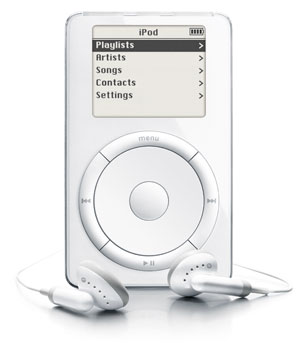
As technology is increasing, depending on the popularity of the piece of technology and how they are marketed they can easily make their way into our daily lives. However as the technology we are currently using increases, we have to adapt to the changes made to carry on using them. An example of this is the original Ipod going all the way to the touchscreen Ipad 4.


As for the internet, that has also improved, from website qualities all the way to video players. 
I'm sure you remember these.
Yes, the millions of pop ups we'd receive while casually using the internet. Unfortunately these have also advanced from the standard one throughout the years. They've now more annoying and really hard to avoid. Example include:
  • Pop ups embedded within the main website (closing it opens another pop up)
  • Adverts which cover the whole screen through rolling the mouse over an original image
  • Adverts which take over the page and load an entire website over the original one and require a click to remove it.
  • Video adverts.
  • Etc
Whose to blame?
Companies who make a profit off the audience by monthly plans to use their services to automatically spam everyone else. An example of such a company would be adimpact who boasts about their online adverting skills, making unblock able pop ups, positive statistics to convince the consumer and an automatic email service.


On the other hand, there are products which were designed to counteract these adverts such as anti viruses some which cost, as they were both designed and marketed for one purpose, its like a never ending war and they can both be as bad as each other as at the end of the day they both gain money from their target audience.

However, despite being a big nuisance, they can actually be really effective if you see something which interests you. A few days ago I saw an advert which was about young teenagers drinking made by "Drinkaware" it basically allowed you to simulate the role of a parent letting you decide whether you child is allowed an alcoholic drink or not. The company managed to achieve this effect very well through a combination of video clips, audio, music and a well presented quiz. The advert seemed more of an interactive and stimulating video quiz/game than a standard pop up due to it being straight to the point and putting them in a real life situation (first person). 


Overall, it depends on the purpose of the advert itself to oversee the fact of it just being a nuisance, but I still believe the majority of them are since their main purpose of them being there was the result of payment from the original company to another company to sell their product to consumers, online or offline.
Bibliography

iPad 3 and iPad 4 To Be Released In 2012 | Free iPad 3 - Claim You're Free iPad 3 direct from Apple. 2012. iPad 3 and iPad 4 To Be Released In 2012 | Free iPad 3 - Claim You're Free iPad 3 direct from Apple. [ONLINE] Available at: http://freeipad3.co.uk/ipad-3-and-ipad-4-to-be-released-in-2012. [Accessed 13 March 2012].

Identifying iPod models. 2012. Identifying iPod models. [ONLINE] Available at: http://support.apple.com/kb/HT1353. [Accessed 13 March 2012].

Popup Blockers | Information Security. 2012. Popup Blockers | Information Security. [ONLINE] Available at: http://itsecurity.vermont.gov/Security_Tools/Popup_Blockers. [Accessed 13 March 2012].

Annoying Pop-Up Ads Are Back, With a Vengeance. 2012. Annoying Pop-Up Ads Are Back, With a Vengeance. [ONLINE] Available at: http://www.switched.com/2009/02/08/annoying-pop-up-ads-are-back-with-a-vengeance/. [Accessed 13 March 2012].

Sunday, 11 March 2012

Power of an audience

Although there are laws for each society, quite often, they are being broken every day despite the consequences which lie ahead. As large groups form through following the same trail of thought, it becomes more of a problem to deal with them whether it being large scale riots or simple work strikes.
 The creation of a strike usually starts from face to face communication and meetings about the same problem, if they can gather enough people, they then usually advertise their proposal through the means of telling friends and family, this happens through normal communication or electronically devices such as mobile phones. Quite often these days, they also advertise through social media websites such as Facebook and Twitter, this way they can set up an online base to attract people beyond their normal reach, it also allows for instant updates on the situation.

After all the planning is done and the events are ready, online petitions can also be formed to use as proof of support to help convince someone of a higher power to support the original request.

In some cases, some of the events start on thing like Facebook groups or official websites and heavily rely on the internet to be able to achieve its purpose, without it, the campaign wouldn't be half as effective.  

When we all work together a lot can be achieved not matter where we are, we just need to make sure people know about its importance and to gain the support of more people.

A good example of this is the campaign called KONY 2012. by creating a very good video and setting up a campaign to allow everyday people to help, it now has over millions of supporters worldwide which originally started from 3 people. In the video they stated that the government originally didn't support their campaign due to it being non beneficial to their own country, after millions of people came along and supported their case the government changed their views and also helped them.

However having the potential to freely alert and gather people may also cause problems, such as organised riots. For example, the BBC stated that several teenagers have been arrested due to different cases of planned riots on the social networking site Facebook, despite being caught and the riots didn't actually take place, the group pages that made were active with different users to the point where they had to be closed and the police had to get involved.

It all depends on the type of user, but the power of a large audience is a scary thing.


Bibliography


Social Media Powers Nigerian Fuel Protests . 2012. Social Media Powers Nigerian Fuel Protests . [ONLINE] Available at: http://www.gakadigital.com/IndustryNews2/IndustryNewsDetails/tabid/85/ArticleId/37/Social-Media-Powers-Nigerian-Fuel-Protests.aspx. [Accessed 12 March 2012].


BBC News - Facebook riot page: Danny Cook jailed for 30 months. 2012. BBC News - Facebook riot page: Danny Cook jailed for 30 months. [ONLINE] Available at: http://www.bbc.co.uk/news/uk-england-hereford-worcester-16185152. [Accessed 12 March 2012].

BBC News - Man jailed for Facebook incitement to riot to appeal. 2012. BBC News - Man jailed for Facebook incitement to riot to appeal. [ONLINE] Available at: http://www.bbc.co.uk/news/uk-england-14557772. [Accessed 12 March 2012].

BBC News - Dundee teenagers locked up for Facebook riot threats. 2012. BBC News - Dundee teenagers locked up for Facebook riot threats. [ONLINE] Available at: http://www.bbc.co.uk/news/uk-scotland-tayside-central-16144640. [Accessed 12 March 2012].

Saturday, 10 March 2012

KONY 2012

I'm sure you've all seen it by now, if not check it out below or you won't understand much of what I’m about to talk about.


Despite this being a very serious topic. I'm quite interested in how a single viral video managed to convince millions to commit themselves not only of their own personal time, but to even get involved and to donate money to help a better cause.

Looking at the statistics the video became viral just in one day, my theory is that it became viral through the sharing through popular social media websites such as Facebook and Twitter.


Even for me, on the day of release I had no idea about this whole campaign or who on earth Joseph Kony is. The first spark of curiosity for me was through the repetitive comments being posted by different YouTube videos which was a bit different than your standard spam of adverts or "Free music" links. This seemed a lot bigger since it still appeared on different genres of videos. This actually made me search out the term "KONY 2012" to see what he fuss was all about. After seeing results and the video duration (30 minutes!), I immediately switched to a different webpage as I thought it wouldn't be worth my time whatever it was. Later that day a close friend who posted the same video on his Facebook, then I just gave up and watched it. I immediately got immersed into the storyline due to the high quality music, speech and video effects, the next thing I know, I've watched the whole thing.
Simon Houpt who works for The Globe and Mail, wrote an online article about the whole video of KONY 2012 decomposed the techniques used to convince a large portion of the world.
They consisted of:
  • Kids- The empathy we would receive towards and infant in comparison an adult greatly differs. By using his son and Jacob (when he was younger) they can really connect with the audience, through there speech and their feelings.
  • Attention span - Despite the video being 30 minutes long it somehow still attracted millions of views. If the viewer can believe they are seeing something meaningful and depending on how well the video is planned out, it can keep them entertained.
  • Secrets - By using percentages and convincing the viewer that they're the one of the few people who know about the events taking place, it makes them feel unique and immerses them more into the video.
  • Join in - By allowing the audience to take part it makes them feel like they're part of the fight, giving them a higher self esteem, and motivating them more to pay attention to the video.
  • Invite others - This works well with previous one as it as easy for the audience to achieve. it basically convinces the audience to advertise the original advert. In this case, they asked the audience to message celebrities (bare in mind the millions that watched the video) to pass the message on further. A simple but very effective, cost friendly way of getting the video known. (it worked on me as well!)
Combined with all of the above, tops it off with brilliant visual effects, memorable photographs/moments, well composed music and amazing stock footage which all allow the video to flow and engrave into the audiences head. The key is well made planning and a good budget. (not always the case.)

If you want to find out more or join the cause. Check out the website Here


Bibliography


Five factors that made the Kony2012 video go viral - The Globe and Mail. 2012. Five factors that made the Kony2012 video go viral - The Globe and Mail. [ONLINE] Available at: http://www.theglobeandmail.com/news/world/five-factors-that-made-the-kony2012-video-go-viral/article2365293/. [Accessed 10 March 2012].


How 'Kony' Clip Caught Fire Online - WSJ.com. 2012. How 'Kony' Clip Caught Fire Online - WSJ.com. [ONLINE] Available at: http://online.wsj.com/article/SB10001424052970204781804577271692294533870.html?mod=googlenews_wsj. [Accessed 11 March 2012].


How the Kony Video Went Viral - NYTimes.com. 2012. How the Kony Video Went Viral - NYTimes.com. [ONLINE] Available at: http://thelede.blogs.nytimes.com/2012/03/09/how-the-kony-video-went-viral/. [Accessed 11 March 2012].

Thursday, 8 March 2012

Digital audio games!

After attending my Media capture and processing lecture, Dave mentioned some creative media which involved creating your own music through tones and timing.

The game was called Isle of Tune and it worked through creating a isometric world revolving around specific objects and mainly cars. Each object played a specific tone and can be changed whenever the user desired.
The game works through timing and accessing tones through a database, I created a little tune you can find Here.
After doing some further research I found some similar games involving the same concept and addictiveness. You can find it Here.

The most interesting thing about this is not the game itself but how a simple idea based from simple tones can be converted into an addictive game. This essentially allows user generated content to expand from a single idea. This not only happens in games but also technology, If this carries on, we're going to have a very interesting future. 


Wednesday, 7 March 2012

Facebook. The best distraction since 2004?

Facebook, where don’t we see it these days? It’s EVERYWHERE. Adverts, posters, singers, actors, the lot!  I don’t know how it just happened! One day my friend was talking/recommending it to me, next second I’m hooked on it as well.
Even Right now in this lab session, as I was rolling around in my wheelie chair I saw 14 people (which gave me weird looks) using Facebook out of the whole class which consisted of 16 people!

What is it?
Well basically it’s a massive scale, free social networking website, which depending on the type of user they can practically do anything within reason. Its main purpose is to allow anyone to create a custom profile about themselves and to keep in contact with their friends and family through instant messaging, wall posting and private messaging.
Facebook is also used for things like social gaming (automatically posting scores and results on their wall), event making, groups and social pages which connect people with the same interests. It practically takes our social time with people and extends it beyond our standard form of face to face or mobile communication; we now have a better form of connecting with people whenever we want to.

History of Facebook
Facebook was launched in February 4th 2004 by 4 university students studying at Harvard University. (Mark Zuckerberg, Eduardo Saverin, Dustin Moskovitz and Chris Hughes) They started off making a website called Facemash, which was a website similar to a one called Hot or Not (a dating website which consisted of rating images of people from 1-10). The project initially started off as a local website allowing only students of that university to join in, but due to the popularity and creation methods, was shut down. They (mainly Mark) then started on creating the new website which we now know as Facebook. As the popularity grew the limits of the website were extended so much we now have around 845 million users using Facebook Today!

Downside
Despite having major good points about, it has several flaws too. Looking at the percentage of users, half of the whole pie chart is covered by users aged 25 and below, meaning a large percentage of the overall users are of a younger audience.  


As well as providing a great resource to them it also creates a big distraction for us as students.
After ironically doing a survey on Facebook, The results support my theory but cannot be used to conclude anything as there aren’t enough participants.  


My personal opinion
Honestly speaking, the website is amazing. I’ve lost cost how many times it’s resolved and helped me plan events and to instantly contact someone through its messaging system. It’s also helped me meet new people and to share laughs and memories all over again. But I have to step back a bit as it has also one of the biggest distractions of my life, so many times I’ve stopped working, due to checking Facebook over irrelevant things (I’m actually on it now as I’m typing this :/) and I’m pretty sure I’m not the only one.

At the end of the day you can love and hate Facebook, it just depends on self control and maturity.

Biblography
What is Facebook? Definition from WhatIs.com . 2012. What is Facebook? Definition from WhatIs.com . [ONLINE] Available at: http://whatis.techtarget.com/definition/facebook.html. [Accessed 29 February 2012].
Facebook Demographics Revisited – 2011 Statistics | Web Business by Ken Burbary. 2012. Facebook Demographics Revisited – 2011 Statistics | Web Business by Ken Burbary. [ONLINE] Available at: http://www.kenburbary.com/2011/03/facebook-demographics-revisited-2011-statistics-2/. [Accessed 07 March 2012].

Wednesday, 22 February 2012

3D Animation and Modelling, Woop!


My stuff here!

                                              |
                                       |
                                       V


CCD vs CMOS!


Tuesday, 14 February 2012

Lighting in videos

Despite this being a somewhat boring topic, after today’s lecture, I have realised the importance lighting in videos. 
In terms of video production, light is the key process in creating the video since all type of cameras needs light to be able to process an image (light detection through the CCD).
However thinking beyond the camera, using light in specific ways can produce several effects which can help tell the story to the audience, examples such as:
  • Intensity (brightness/strength of the outputting light)
  • Quality (direct light often used for emphasis of actors/objects and diffused light, often used to control shadows)
  • Light contrast (contrast between light and dark tones, can be used for emphasis or to give a powerful impact)
  • Light direction (depending on use, it can create a mystery type theme, or silhouettes )
  • Colour of the light (to create a specific impact or to support the original light source)
Often in video production, there is more than one light source in out scene, whether it being a lamp in the background or an off shot external light they all serve a purpose if used correctly. An important effect quite often used is called the 3 Point Lighting Technique.
This consists of 3 lights used on one object at the same time, A Key light (main light source for a scene, creates occlusions), a Fill light (usually opposite the key light to control the intensity of shadows created by the key light) and Back light (usually opposite both lights, it shows more illumination for the surroundings giving a more natural lighting scene, it also outlines the object/actor from behind). If this technique is used correctly, it can create a very strong scene to immerse the audience.


Bibliography
HowStuffWorks "How Camcorders Work". 2012. HowStuffWorks "How Camcorders Work". [ONLINE] Available at: http://electronics.howstuffworks.com/camcorder2.htm. [Accessed 14 February 2012].

Video Lighting Basics - Three Point Lighting - YouTube . 2012. Video Lighting Basics - Three Point Lighting - YouTube . [ONLINE] Available at: http://www.youtube.com/watch?v=AcMX1RcNRYA. [Accessed 14 February 2012].